
WHAT IS A COMMUNITY SPORTS CLUB?
June 25, 2026 - 3 months ago
“Community" isn't a business structure. It's the impact you have on people.
When people hear the words community sports club, they usually picture exactly what they should.
A local club. Volunteers cooking the BBQ. Parents lining the field. Coaches giving up their weekends. Committee members doing endless paperwork for no pay. Clubs that have been around for generations and are woven into the fabric of their suburbs.
I've been lucky enough to be part of clubs like that throughout my life, and I still am today. They are incredible organisations and deserve to be supported.
But here's the question I keep coming back to.
What actually makes a community sports club?
Because according to most councils and government bodies, Urban Rec isn't one.
We're a business.
That single word means we generally miss out on almost every concession available to traditional community clubs.
Community clubs receive earlier access to venue bookings. They pay less to hire council facilities. They're prioritised through Expressions of Interest. They receive more favourable booking allocations and often secure the best venues and times before anyone else gets a look in.
Urban Rec gets whatever is left.
Not because we don't serve the community.
Not because we don't get people active.
Not because we're less inclusive.
Simply because we're a business.
Does Profit Cancel Out Community?
This is where I struggle.
Yes, Urban Rec exists to make a profit.
But does making a profit somehow reduce the value you provide to your community?
I'd argue it doesn't.
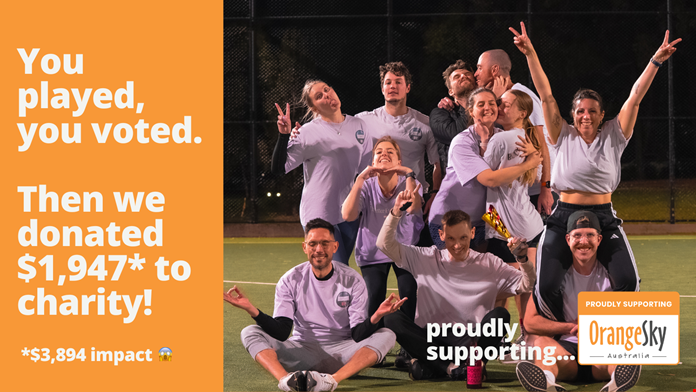
Every week thousands of people play in Urban Rec leagues.
Many arrive knowing absolutely nobody.
They leave with teammates, friends, relationships, support networks and communities that often extend well beyond sport.
We've created welcoming spaces for beginners who have never touched a ball before.
We've built competitions where winning matters far less than belonging.
We've introduced initiatives that encourage greater female participation in traditionally male-dominated sports.
We've created programs that improve accessibility and inclusion.
We're constantly trying to remove barriers instead of creating them.
If community is measured by bringing people together, keeping them active and creating genuine social connection, I'd argue we're doing exactly what a community sports organisation should.
The Economics Don't Add Up
Here's the part that surprises most people.
Community clubs often receive discounted venue hire.
Many rely heavily on volunteers.
Many receive grants and government support.
Yet it's not uncommon for joining one to cost more than registering with Urban Rec.
Think about that.
A business paying wages, paying commercial overheads, paying higher venue fees and generally receiving fewer concessions can often deliver sport for less money than organisations receiving significant government support.
That's not a criticism of community clubs.
It's simply asking whether the current system still reflects reality.
Community Shouldn't Be Defined by Your Tax Status
The current model effectively says that because we operate as a business, we should begin every season from a disadvantaged position.
Higher venue costs.
Later booking windows.
Less access to premium facilities.
Reduced influence in allocation processes.
Why?
If two organisations are getting people active, improving mental health, building friendships and creating stronger communities, shouldn't both have an opportunity to access public sporting infrastructure fairly?
Surely the question should be:
Who is serving the community best?
Not:
Who has the right legal structure?
Supporting Community Doesn't Mean Excluding Business
This isn't about taking anything away from traditional clubs.
They absolutely deserve support.
Many couldn't survive without volunteers and government assistance.
But perhaps it's time to acknowledge that the sporting landscape has changed.
Businesses like Urban Rec aren't replacing community clubs.
We're serving a different audience.
Adults who no longer play competitive sport.
People who work long hours.
Beginners.
Shift workers.
People who simply want somewhere to belong without committing every Saturday for six months.
We're filling gaps that traditional sport often can't.
And we're doing it while employing people, paying taxes, creating jobs and investing back into the communities we operate in.
Maybe It's Time to Rethink the Definition
Perhaps government support shouldn't be based solely on whether an organisation is incorporated as a not-for-profit.
Perhaps it should also consider outcomes.
Participation.
Inclusion.
Accessibility.
Community impact.
Growth.
The number of people you're actually getting active.
Because if your organisation is building healthier communities, creating meaningful social connections and making sport more accessible, shouldn't that count for something?
Regardless of whether you make a profit.
One final thought.
I've lost count of the number of times I've driven past council fields sitting completely empty under floodlights because the community club that secured the allocation didn't end up needing it.
The booking was so heavily subsidised that there was little incentive to give it back, and holding onto it helped protect future allocations.
Meanwhile, organisations ready to use those fields are turned away.
Empty grounds.
Waiting lists elsewhere.
That's hard to reconcile with the idea of maximising community benefit.
But perhaps that's a conversation for another article.
Thanks for listening,
Danny
UR Australia GM